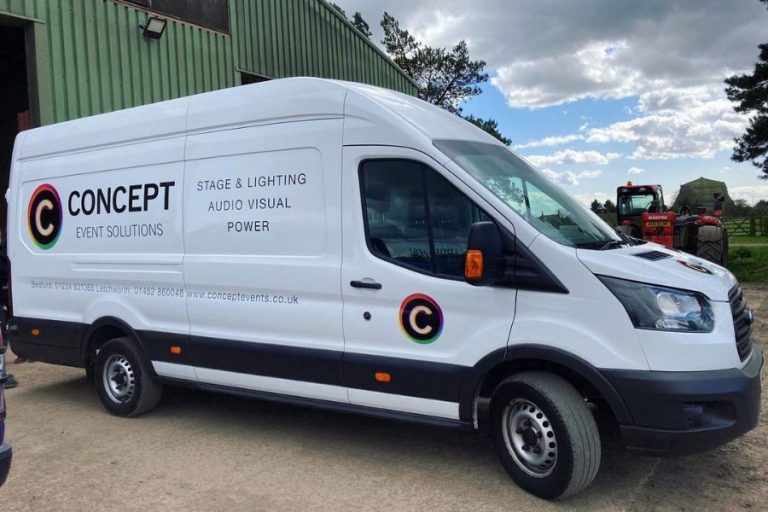
MK Weekender arrived at Campbell Park from 14 to 16 August 2026, bringing together live entertainment, audiences, suppliers and technical teams across a busy outdoor festival site.
For anyone researching how to plan a music festival, the finished event only tells part of the story. Long before the first performance begins, the site has to be built, powered, tested and coordinated so that artists, crews and audiences can move through it safely and efficiently.
This post-event case study examines the production thinking behind MK Weekender 2026, from site layout and power distribution to lighting, backstage logistics, and contingency planning. For the pre-event perspective, you can also read our MK Weekender production preview.
MK Weekender 2026 at a Glance
A successful festival build starts with understanding the site, schedule and production requirements before equipment arrives.
Dates, Location and Format
MK Weekender took place at Campbell Park in Milton Keynes between 14 and 16 August 2026.
As with any large outdoor event, the production challenge was not simply installing equipment. The site had to be considered a single connected environment, with staging, power, technical areas, backstage access, and audience movement all working together.
This is where good festival production planning becomes essential.
Planning Campbell Park as a Festival Site
A festival site plan should begin with what the venue can and cannot provide.
Outdoor locations have very different requirements from permanent indoor venues. Production teams need to consider vehicle access, ground conditions, distances between areas, power availability and how the public will move around the site.
At Campbell Park, the team had to work around the characteristics of an open outdoor site rather than simply positioning equipment wherever space appeared available.
A practical festival site-planning checklist should always cover vehicle routes, loading areas, audience entrances, emergency access, backstage areas, technical compounds, and utilities.
The more accurately these requirements are mapped out before the build, the fewer changes are needed once heavy equipment and structures arrive on site.
Stage and Audience-Area Decisions
The stage has to work for performers, technical teams and the audience at the same time.
Stage positioning affects much more than where performers stand. It also influences crowd sightlines, sound coverage, backstage movement, vehicle access and the position of technical infrastructure.
For organisers planning festival stages, the key is to treat staging as part of the wider site rather than as an isolated structure.
Important questions include how large the performance area needs to be, what production equipment will sit on or around the stage, and whether artists can access backstage areas without crossing public routes.
Our guide to outdoor concert stage planning explores those considerations in more detail.
Power Distribution and Backup Planning
A festival power plan has to account for every connected area, not only the main stage.
Power may be needed across performance areas, technical positions, catering, backstage spaces, lighting and operational infrastructure.
The production team, therefore, needs a clear picture of electrical demand before the event begins. Generators and distribution should be planned around actual equipment loads, location and contingency requirements.
Good festival production planning also considers what happens if a primary source fails. Backup arrangements should be identified before the event rather than improvised once the site is live.
Lighting, Sound and Technical Coordination
Technical departments have to operate as a single system rather than as separate suppliers.
Lighting, sound, power and staging are closely connected. A change to one element can affect the others, particularly when equipment shares structures, power distribution, or workspace.
Pre-production coordination helps ensure technical requirements are understood before installation begins. On-site testing then confirms that the equipment performs as expected in the real environment.
This is one reason event equipment coordination can make large outdoor productions easier to manage. Fewer disconnected handovers can mean clearer responsibility when timings or requirements change.
Artist Changeovers and Backstage Logistics
What happens between performances can be just as important as what happens during them.
Busy festival schedules often leave limited time to move artists, instruments and technical equipment on and off stage.
The backstage plan, therefore, needs clear routes, storage areas, crew responsibilities and realistic timings. Without them, delays during one changeover can affect the rest of the programme.
The principles covered in our guide to artist changeover logistics are particularly important where multiple acts are appearing across a tightly managed schedule.
Weather, Ground and Access Contingencies
Outdoor event production has to work with the site conditions available on the day.
Anyone learning how to plan an outdoor event should build weather and ground contingencies into the production plan from the start.
Rain can change vehicle access and surface conditions. Wind may affect temporary structures. High temperatures can create different welfare and equipment considerations.
A strong plan asks what could change and what action would follow. This might include alternative vehicle routes, ground protection, revised installation procedures or technical shutdown thresholds.
Safety, Accessibility and Audience Movement
A show-ready site needs to work for the people moving through it as well as the equipment installed on it.
Audience routes, accessible access, emergency movement and staff-only areas all need to be considered before gates open.
Production decisions can affect these routes. Cables, barriers, stage structures and technical positions should not create unnecessary obstacles or bottlenecks.
Accessibility is also more effective when considered during planning rather than treated as a last-minute adjustment. Routes, viewing areas, and facilities should be included in the overall site plan.
What Changed Onsite, and How Did the Team Respond?
No detailed production plan removes the need to adapt once the build begins.
Site conditions, schedules and operational requirements can change once teams are working in the real environment.
The value of experienced production management lies in the ability to adjust without losing sight of safety, timing, or the wider event plan.
Five Lessons for Future Festival Organisers
The biggest production lessons usually come from coordination rather than individual pieces of equipment.
- First, start site planning early enough to understand what infrastructure needs to be brought in.
- Second, confirm access before delivery vehicles arrive. A suitable festival area still requires appropriate routes for trucks, trailers, and equipment.
- Third, treat staging, power, lighting and sound as connected systems. Decisions made in isolation often create complications elsewhere.
- Fourth, build contingencies around real risks such as weather, access and technical failure rather than relying on a general backup plan.
- Finally, leave room in the programme for rehearsals, checks and operational changes. A schedule that only works when everything goes perfectly is rarely robust.
A Production Checklist for Large Outdoor Events
A simple pre-production checklist can expose gaps before they become onsite problems.
Before confirming your festival plan, check that the team has agreed on the site layout, vehicle access, stage requirements, power demand, technical responsibilities, backstage routes, accessible access, audience movement and weather contingencies.
You should also confirm who can make decisions onsite if circumstances change and how those changes will be communicated across departments.
That is the practical foundation for planning a music festival successfully.
Final Thoughts
MK Weekender 2026 provides a useful example of the transformation that occurs between an empty outdoor site and a festival ready to welcome thousands of people.
Good festival production planning brings together site layout, staging, technical equipment, power, backstage movement, safety and contingency planning so each element supports the others.
For organisers asking how music festivals are organised, the answer is rarely one big decision. It is the result of hundreds of coordinated decisions made before and during the event, supported by a team that understands how each part of the site affects the next.
You can explore more production advice from Concept Event Solutions or use the linked planning guides above to build your own event production plan.